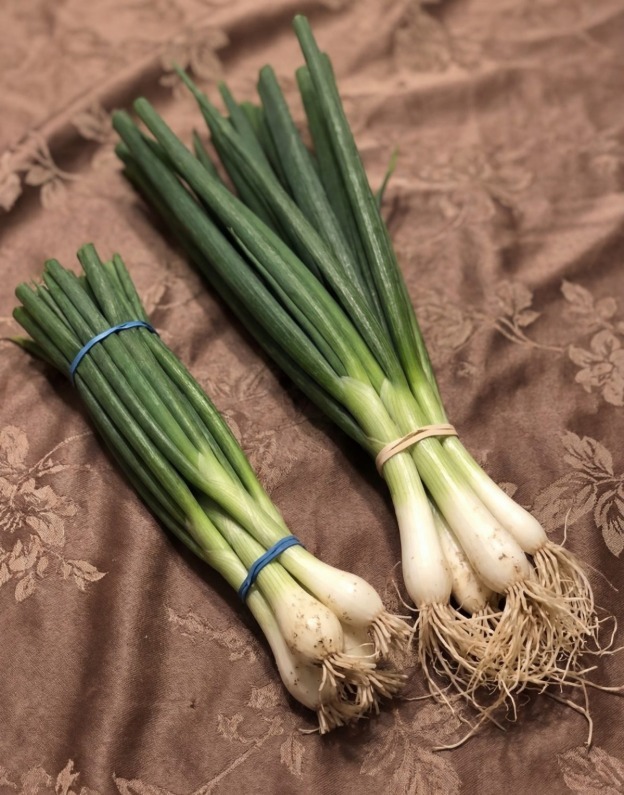
At first glance, these four all look like “green onion-y things”—and they’re often used interchangeably in recipes. But they’re not the same, and knowing the subtle differences can help you choose the right one for flavor, texture, and presentation.
Here’s a clear, practical breakdown:
1. Green Onions = Scallions (Yes, They’re the Same!)
What they are: Young onions harvested before the bulb has fully formed.
Appearance:
Thin, straight white base (no bulb)
Long, hollow green stalks
Flavor: Mild, fresh, slightly sweet—milder than regular onions.
How to use:
Raw: In salads, garnishes, salsas, baked potatoes
Cooked: Stir-fries, omelets, soups (add at the end)
Tip: Both white and green parts are edible—the white is sharper, the green more delicate.
Key takeaway: “Green onions” and “scallions” are two names for the exact same vegetable. No difference!
2. Spring Onions
What they are: Slightly more mature than scallions—they’ve started forming a small, round bulb at the base.
Appearance:
Continued on next page:
Noticeable bulb (1–2 inches wide)
Longer, thicker green tops than scallions
Flavor: Stronger and sweeter than scallions—closer to a mild red or yellow onion, but still fresh.
How to use:
Grill or roast whole (brush with oil, char on the grill)
Sauté bulbs, use greens as garnish
Great in Mediterranean, Middle Eastern, and Asian dishes
Tip: The bulb can be used like a regular onion; greens like scallions.
Key takeaway: Spring onions have a bulb; scallions don’t.
3. Chives
What they are: An herb (related to onions, garlic, and leeks), not a vegetable.
Appearance:
Very thin, solid (not hollow), grass-like green stems
No white base or bulb (grows from a clump)
Flavor: Delicate, oniony, and subtle—much milder than any onion.
How to use:
Always raw or added at the very end of cooking (heat destroys flavor)
Perfect for garnishing soups, baked potatoes, deviled eggs, creamy dips
Snip with scissors—never chop with a knife (bruises them)
Varieties:
Common chives: Onion flavor
Garlic chives: Flat leaves, garlicky taste (used in Asian cuisine)
Key takeaway: Chives are an herb—use them fresh, never cooked.
Quick Reference Guide
Continued on next page:
TYPE
BULB?
HOLLOW STEMS?
FLAVOR STRENGTH
BEST USED
Scallions / Green Onions
No
Yes
Mild
Raw or lightly cooked
Spring Onions
Yes (small)
Yes
Medium-sweet
Grilled, roasted, sautéed
Chives
No
No (solid)
Very mild
Raw only—as garnish
Pro Tips for Cooking
Don’t substitute chives for scallions in cooked dishes—they’ll disappear flavor-wise.
Use spring onions when you want more onion punch (e.g., in frittatas or grain bowls).
Store scallions upright in a jar with water (like flowers)—they’ll stay crisp for over a week!
Freeze chopped scallions for cooking (not garnish)—they lose crispness but keep flavor.
The Bottom Line
Continued on next page:
While these four share an oniony family resemblance, they each bring something unique to the table:
Scallions/green onions: Your everyday all-purpose green onion
Spring onions: For when you want a little more oniony heft
Chives: A delicate finishing touch—nature’s green confetti
“Good cooking isn’t about fancy ingredients—it’s about using the right one at the right time.” 🌱✨
Now you can shop and cook with confidence—no more guessing at the grocery store!