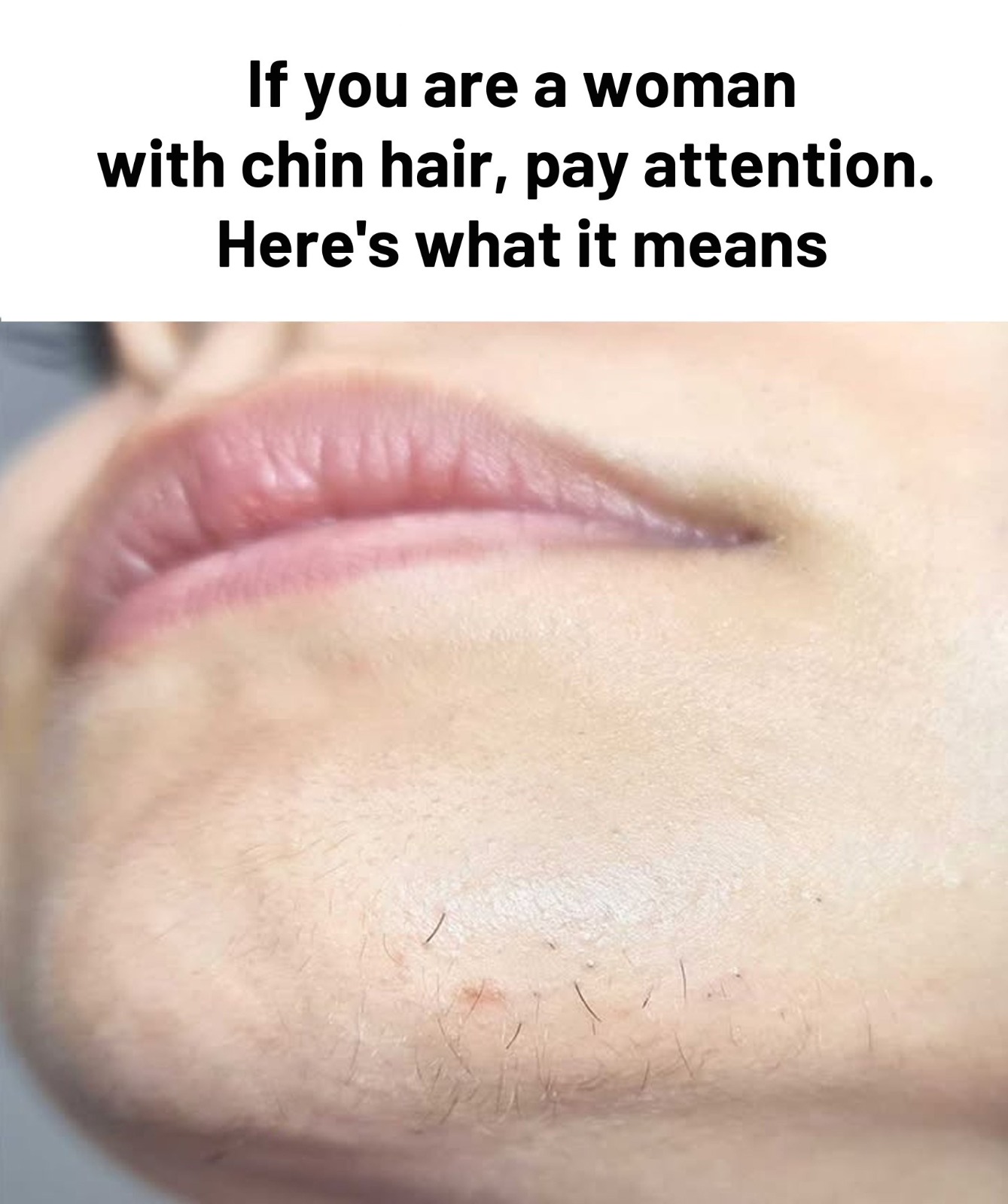
The appearance of coarse, dark hairs on the chin or jawline is a common concern for many women across diverse ages and backgrounds. While often dismissed as a cosmetic nuisance, this change can—depending on pattern, pace, and accompanying symptoms—signal underlying physiological shifts worthy of clinical attention.
This article provides evidence-based context to help distinguish between benign age-related changes and signs that may warrant medical evaluation.
Normal vs. Notable: Setting the Context
- Expected with aging: Mild terminal hair growth on the chin is common during perimenopause and menopause due to shifting estrogen-to-androgen ratios. Occasional pluckable hairs are typically benign.
- Potentially significant: Sudden onset, rapid progression, coarse/dark hair in male-pattern distribution (chin, jawline, upper lip, chest, abdomen), or hair growth accompanied by other symptoms warrants professional assessment.
Key Clinical Considerations
1. Hormonal Influences
Elevated androgens (e.g., testosterone, DHEA-S) may stimulate terminal hair growth in androgen-sensitive areas. Contributing factors include:
Elevated androgens (e.g., testosterone, DHEA-S) may stimulate terminal hair growth in androgen-sensitive areas. Contributing factors include:
- Polycystic Ovary Syndrome (PCOS): Affects ~10% of reproductive-aged individuals; often presents with irregular cycles, acne, scalp hair thinning, and insulin resistance.
- Menopause/Perimenopause: Declining estrogen creates relative androgen dominance.
- Thyroid Dysfunction: Hypothyroidism may lower sex hormone-binding globulin (SHBG), increasing bioavailable androgens.
- Insulin Resistance: Hyperinsulinemia can stimulate ovarian androgen production.
- Adrenal Disorders or Medications: Certain steroids, hormone therapies, or rare tumors may alter androgen levels.
2. Genetic and Ethnic Factors
Hair growth patterns vary significantly across ethnicities. Individuals of Mediterranean, Middle Eastern, South Asian, or Latin American descent may experience naturally denser facial hair without pathology. Family history is a relevant consideration.
Hair growth patterns vary significantly across ethnicities. Individuals of Mediterranean, Middle Eastern, South Asian, or Latin American descent may experience naturally denser facial hair without pathology. Family history is a relevant consideration.
3. Medication Review
Drugs such as minoxidil, anabolic steroids, certain antipsychotics, or progestin-dominant contraceptives may contribute to hirsutism. A thorough medication review is essential during evaluation.
Drugs such as minoxidil, anabolic steroids, certain antipsychotics, or progestin-dominant contraceptives may contribute to hirsutism. A thorough medication review is essential during evaluation.
When to Consult a Healthcare Provider
Continued on the next page
When to Consult a Healthcare Provider
Seek clinical evaluation if you observe:
✓ Rapid or progressive increase in coarse facial hair
✓ Hair growth in multiple androgen-sensitive areas
✓ Concurrent symptoms: irregular menses, severe acne (especially jawline), unexplained weight changes, scalp hair loss, fatigue, or skin changes (e.g., acanthosis nigricans)
✓ Concern about medication side effects
✓ Rapid or progressive increase in coarse facial hair
✓ Hair growth in multiple androgen-sensitive areas
✓ Concurrent symptoms: irregular menses, severe acne (especially jawline), unexplained weight changes, scalp hair loss, fatigue, or skin changes (e.g., acanthosis nigricans)
✓ Concern about medication side effects
A provider may recommend:
- Hormonal panel (total/free testosterone, DHEA-S, SHBG, prolactin)
- Thyroid function tests (TSH, free T4)
- Metabolic screening (fasting glucose, insulin, lipid panel)
- Pelvic ultrasound (if PCOS is suspected)
Management Approaches
Medical:
- Address underlying conditions (e.g., metformin for insulin resistance, thyroid hormone replacement)
- Anti-androgen therapies (e.g., spironolactone, combined oral contraceptives—requires medical supervision)
- Topical eflornithine hydrochloride (prescription) to slow regrowth
Cosmetic:
- Laser hair removal (most effective for dark hair on light skin; requires multiple sessions)
- Electrolysis (permanent option for all skin/hair types)
- Gentle epilation methods; avoid aggressive waxing if skin is sensitive or prone to irritation
Lifestyle Support:
- Balanced nutrition emphasizing low-glycemic, anti-inflammatory foods
- Regular physical activity to support insulin sensitivity
- Stress management techniques (chronic stress may elevate cortisol and androgens)
- Note: Supplements (e.g., inositol, vitamin D) should only be used under clinical guidance.
A Note on Self-Perception and Care
Facial hair does not diminish your health, worth, or femininity. Many women manage unwanted hair safely and effectively for personal comfort. However, when changes feel unusual or are accompanied by other symptoms, viewing them as potential physiological signals—rather than purely cosmetic concerns—can empower proactive health decisions.
Your body communicates through many channels. Listening with curiosity, not judgment, is an act of self-respect. If concerns arise, consult a gynecologist, endocrinologist, or dermatologist for personalized assessment. You deserve care that honors both your physical well-being and your peace of mind.
This information is for educational purposes and does not constitute medical advice. Always consult a qualified healthcare professional for diagnosis and treatment.