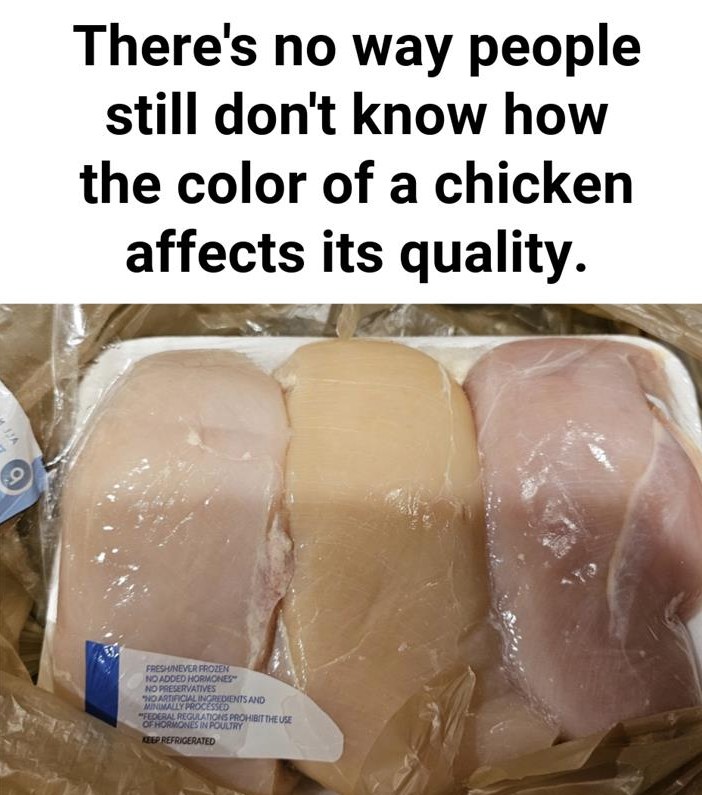
Not automatically. Yellow coloring can hint at a more natural diet and better living conditions, especially if the bird is pasture-raised or free-range. This often means fewer antibiotics and a healthier fat profile.
However, some farms enhance color with supplements like lutein. That golden hue doesn’t always mean better quality—just brighter meat. Always check for labels like “pasture-raised,” “free-range,” or “organic” for assurance.
Does Color Affect Flavor?
Color itself doesn’t change taste—but it reflects lifestyle. Factory-farmed white chicken tends to be mild, lean, and slightly watery. Birds that roam freely and eat a diverse diet usually develop richer flavor, firmer muscle, and more satisfying texture.
Chicken Skin: More Than Just Aesthetic
Skin color varies from pale to golden yellow. Diet drives this variation, and culture shapes perception. In some countries, yellow skin signals freshness and flavor; in others, white skin suggests cleanliness. Both views are valid—it’s regional preference, not quality.
Free-Range vs. Pasture-Raised
Labels can be misleading. USDA “free-range” only guarantees outdoor access—how much or where isn’t specified. True pasture-raised chickens roam open fields, pecking bugs, grass, and seeds. These birds often have:
Continued on next page: