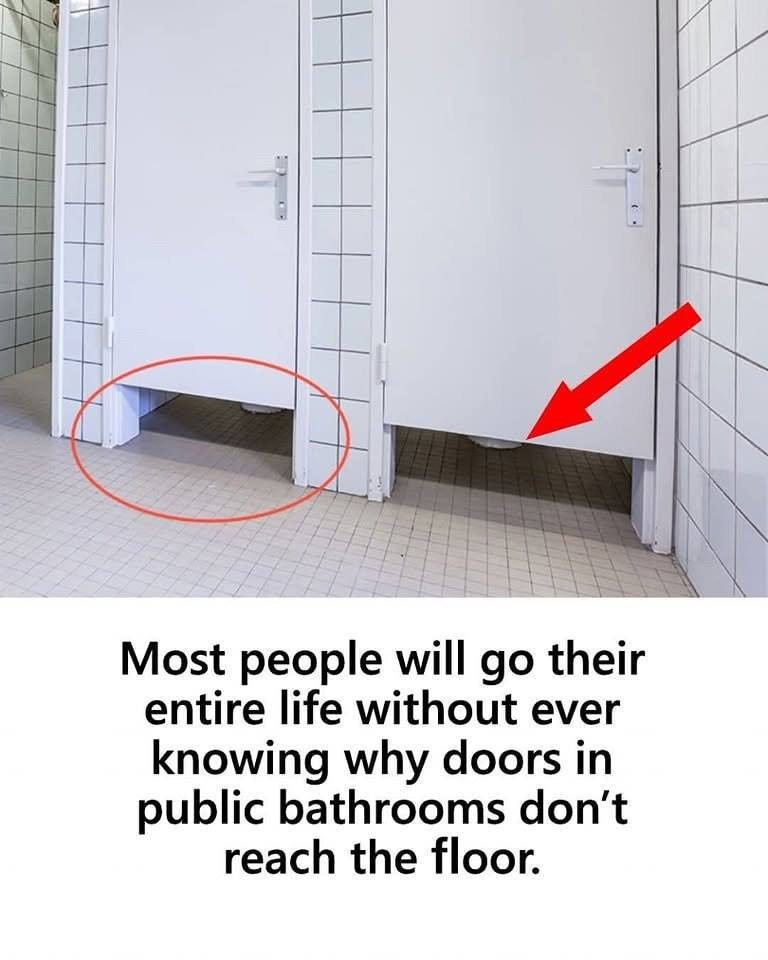
Why Doors in Public Bathrooms Don’t Reach the Floor
It’s something almost everyone has noticed but few people question: why do public bathroom doors stop well above the floor? While it may feel awkward or unnecessary, there are actually several practical reasons behind this design choice—and most of them make a lot of sense.
1. Safety Comes First
One of the main reasons is safety. The gap allows people to see if a stall is occupied and makes it easier to help someone in case of an emergency, such as a fainting incident or medical problem.
2. Easier Cleaning and Maintenance
Public restrooms need frequent and thorough cleaning. A raised door allows janitors to:
-
Wash floors quickly
-
Push water and cleaning tools underneath
-
Prevent damage to doors from constant moisture
This design keeps maintenance costs lower and hygiene standards higher.
3. Better Ventilation
The gap helps air circulate, reducing odors and humidity inside the stall. Proper airflow helps prevent mold, mildew, and lingering smells—important in high-traffic restrooms.
4. Cost Efficiency
Shorter doors require less material, which significantly reduces construction and replacement costs. In large public buildings, this difference adds up quickly.
5. Discourages Misuse
Open gaps discourage vandalism, drug use, and other inappropriate activities by increasing visibility and accountability.
6. Faster Access Awareness
From the outside, it’s easier to see whether a stall is occupied by checking for feet, reducing unnecessary door pulling and wait times.
Why It Feels Uncomfortable
The design prioritizes function over privacy, which is why many people feel exposed. Some newer or higher-end facilities now use floor-length doors to improve comfort, especially in airports, offices, and modern shopping centers.
The Bottom Line
Public bathroom stalls aren’t designed to be cozy—they’re designed to be safe, clean, efficient, and affordable. That awkward gap at the bottom isn’t an accident; it’s a compromise between privacy and practicality.
So next time you notice it, you’ll know—it’s all part of the plan